
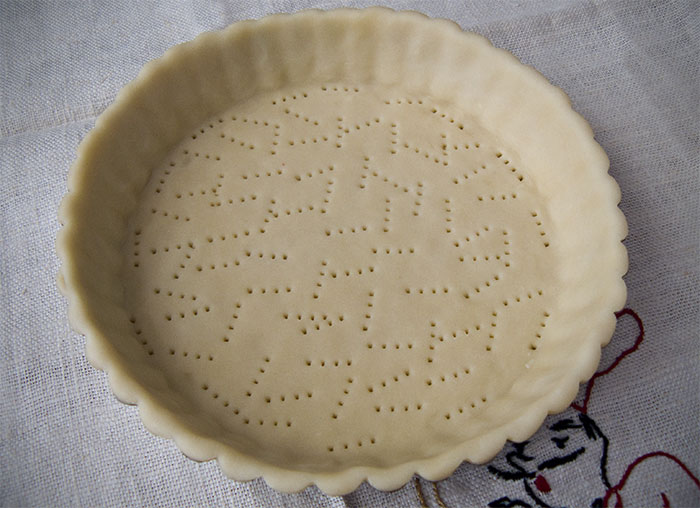
Pâte Brisée
| Ingredient | 2 7-inch Tarts | 2 18-20cm Tarts |
|---|---|---|
| all-purpose flour | 8¾ oz. | 250g |
| unsalted butter | 11 Tbsp. | 150g |
| salt | ½ tsp. | ½ tsp. |
| ice water | 4 - 6 Tbsp. | 4 - 6 Tbsp. |
| egg | to brush | to brush |
This is a delicately-textured unsweetened tart shell, used as the foundation for recipes requiring a light short pastry base. This version uses the frasisage method of kneading to produce a flaky crust without a whole lot of work.
Preparation
- Cut the butter into thin slices and put in the refrigerator to chill.
- Mix the flour and salt in a mixing bowl and put in the refrigerator to chill. Also put the water in the refrigerator.
Directions
- Cut together butter and flour.
Whisk the chilled flour to fluff it. Add the sliced butter, then cut in with a pastry cutter until the chunks of butter are pea sized. - Mix using sablage method.
Scoop up some of the mixture in one hand and rub your other hand across it; the dough should crumble into a parmesan cheese-like texture. Continue until all the dough is evenly-textured; rub any larger chunks of butter between your fingertips to break them up. - Mix in water.
Make a well in the middle of the mixture and pour 4 tablespoons (60 ml) of ice water into it. Mix using a cutting motion with a dough scraper or the sharp edge of a spatula; don’t stir. If the dough is too dry, add more water and mix in with the same cutting motion. - Frasisage dough.
Turn the dough out onto an un-floured work surface and work it using the frasisage method: Gather it into a long-ish mound and begin smearing the dough away from yourself along the length of the mound, using short strokes, with the heel of your hand. When you’ve worked across all the dough, gather it together again and repeat once. - Make two balls.
Gather the dough into two equal balls and cover tightly in plastic wrap, then let rest in the refrigerator for at least an hour, up to overnight. If you won’t be using all of it, put the tightly wrapped extra ball in a sealed bag and freeze; thaw in the refrigerator when you’re ready to use it. - Roll dough.
Dust a work surface with flour and put a ball of dough on it. Roll the chilled dough out until somewhat larger than the tart pan you’ll be using (about 3mm thick). If the dough is too stiff to roll, let it sit at room temperature for 15 minutes or so. - Lay dough in pan.
To keep the sheet from tearing when you transfer it to the pan, roll it gently onto the rolling pin, then unroll it onto the pan. - Press dough into pan.
Gently press the dough into the corners of the pan with your fingertips, being careful not to tear it. - Cut away excess and even.
Roll the pin across the top of the pan to cut away any excess hanging over the edge. Use a fingertip to press the dough into the scalloped edge of the tart pan. If any places on the bottom are thicker or thinner than others use your thumbs to even them out. Use some of the dough you cut away to fill any holes or tears. Since it will shrink slightly when baked, press a small amount (1/16" or 2-3mm) out above the edge of the pan. - Cover and let rest.
Cover the dough tightly with a piece of the plastic wrap, then let rest in the refrigerator for at least an hour. - Prick with fork.
Thoroughly prick the dough on the bottom of the pan with a fork; you want to poke holes all the way through the dough. - Bake.
When baking a filled tart, the goal is to blind bake it until it’s 80% done, then add the filling and bake the remaining 20%:
- Lay a piece of foil over the dough, then add some pie weights, rolling the foil down over the outside edge a little to keep it from burning.
- Bake at 220°C (450°F) for 15 minutes.
- Remove the weights and foil, then reduce to 200°C (400°F) and bake for another 5-15 minutes, until pale golden.
- Brush with egg and bake for 1-2 more minutes; this keeps the filling from making the tart soggy.
- Put the pan on a cake rack to let the tart cool before filling it, then bake according to the recipe.
If you’re going to be filling the tart after it’s fully baked:
- Lay a piece of foil over the dough, then add some pie weights, rolling the foil down over the outside edge a little to keep it from burning.
- Bake at 220°C (450°F) for 15 minutes.
- Remove the weights and foil, then reduce to 200°C (400°F) and bake for another 15-20 minutes, until golden brown.
- Brush with egg and bake for 1-2 more minutes; this keeps the filling from making the tart soggy.
- Put the pan on a cake rack to let the tart cool before filling it.
Notes
- The tart will tend to shrink while baking; letting it rest properly in the refrigerator both times will minimize this. Having it well-chilled right before baking will keep the butter firm until the dough begins to cook, which helps the tart keep its shape.
- The ingredients listed above are the basic proportions; by adding egg yolk or sugar, or adjusting the amount of butter, you can change the texture and flavor of the tart to suit the recipe or your taste. For example:
- flour: 250g
- butter: 150g (11 Tbsp.)
- egg yolk: 1
- powdered sugar: anywhere from 5-25g
- water: 3 - 5 Tbsp.
- salt: ½ tsp.
- When using the sablage method, put the salt, egg yolk, and water in the well, stir them together, then cut into the dough.
- The frasisage method creates an effect similar to puff pastry, but is much easier to do. The smearing motion effectively creates thin sheets of butter between thin sheets of flour that form flaky layers when baked. A frasisage shell is also less prone to leaking than a regular kneaded pie or tart crust, since you’re less likely to have a glob of butter that will melt and form a hole in the crust.